I'll retain this site in case I feel the need for future personal updates, but in the meantime...
Follow my work at: http://wordswithem.wordpress.com/
Thursday, September 25, 2014

Monday, June 2, 2014
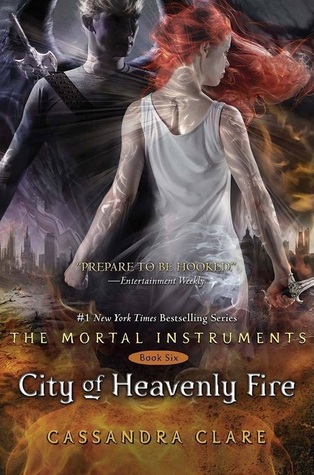
Ave Atque Vale, TMI: City of Heavenly Fire Review
City of Heavenly Fire
is the sixth and final installment of YA bestseller Cassandra Clare’s “The Mortal Instruments” series. While I still wish Clare had ended with the
excellent conclusion of the original trilogy, CoHF is better than the previous two books combined. Much of the
clumsiness and stale fanservice of City
of Fallen Angels and City of Lost
Souls are traded for the deft mix of action and wit-tempered angst that
made the original books so fun, bringing the series to a satisfying close.
As usual, there’s a good balance between the main plot and
the character arcs. There are no huge surprises in store, but Sebastian
Morgenstern is a suitably deranged villain (I can’t help but picture him as a
young, bleached-out Ramsay Snow) and the conflict propels the reader quickly along.
While Clare’s numerous romantic subplots are often in the foreground, she is
surprisingly at her best here when she explores other types of love—familial, and
platonic. For instance, as invested as many readers are in Alec and Magnus (and
yes, this ‘ship remains in focus), the most poignant and best written of Alec’s
scenes instead explore his relationships with Simon, Jace, and his father. The
concept of parabatai remains one of
the most interesting facets of Clare’s ‘verse, and there are ample hints here
that it will play a primary role in her forthcoming series, “The Dark Artifices.” (For the record: I’d put my money on a Parabatai-in-Forbidden-Love scenario with new characters Emma and
Julian, but I wish someone would encourage Clare to ease off the romance peddle
and try something else—she would really be great at it!).
There are some good payoffs to be found here for fans of
Clare’s Victorian Shadowhunter trilogy, “The Infernal Devices.” Particularly
satisfying is a logical and plot-related fix-it for the somewhat ludicrous
“twist” at the conclusion of Clockwork
Princess.
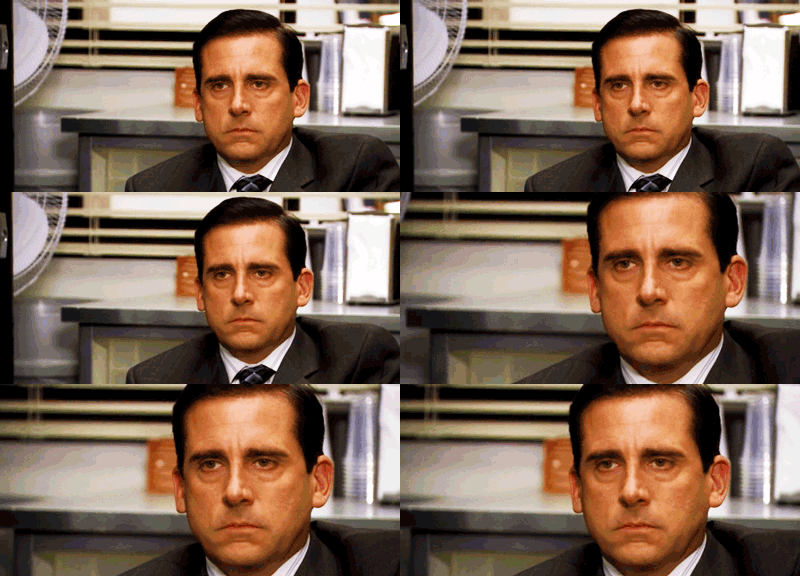 |
| {My actual face upon finishing Clockwork Princess.} |
And for readers who followed Clare’s ascent from the depths
of fandom…well. Let’s just say that there is a sex scene that reads so blatantly,
awkwardly, and wonderfully like the beginning of mediocre fanfiction smut that
said readers are warned not to eat or drink anything they might choke on while
reading this particular scene, because they will definitely be howling with
laughter.
(I say this purely from a theoretical standpoint,
obviously!)
The book’s only real shortcoming is that it’s unnecessarily
long. A number of the action sequences feel superfluous. It isn’t so much the
writing itself, but the issue of the Shadowhunters being so OP. There are
casualties, but very rarely does the reader have a true sense of dread over the
protagonists’ fates. The other issue here is that there’s a significant chunk
of the book devoted to setting up “The Dark Artifices.” A gaggle of new and
mostly interchangeable kid characters are introduced in the beginning and
returned to throughout in what feels like exposition+.
Their interactions with Clary and co. are limited enough that I skimmed the majority
of their segments, as I do not intend to read TDA. Likewise, the battle scenes
are easily skimmed without missing much pertinent information.
Clare has demonstrated a habit of pouring out the angst only
to mop it up in an overly-rosy conclusion, and there’s no difference here. I
imagine that fans will be divided on this point, particularly in regards to the
fate of one of the protagonists. However, I do think there might be something
to be said for happy endings in a YA market saturated by downers. Of the
popular YA lit I’ve encountered in the past couple years, I think the most
upbeat ending could at best be described as “bittersweet.” Ultimately, my
eye-rolling at the ending was paired with an understanding that, in a
classically escapist genre, sometimes young readers could use a break from the
gloom and doom.
I may have purchased City
of Heavenly Fire out of my begrudging loyalty to Cassandra Clare and the fact that I had a six hour flight ahead of me, but I can’t stress
enough how pleasantly this book surprised me. Whether it was my low expectations
after the underwhelming CoFA and CoLS, or the fact that Cassie never
fails to deliver on writing my favorite brand of sassy one-liners, I devoured
this one. A satisfying end to uneven but fun series. Ave atque vale, TMI.
Tuesday, January 28, 2014
WriteWriteWrite
I have a (somewhat-self-imposed) April 1st draft deadline, so I'm currently immersed in a writerly fog. I've just hit that point where I'm starting to feel fully enveloped in my characters and story. It's a wonderful and terrifying moment. On the one hand, I just want to hole up in my writing cave and bang away at the keyboard; but on the other, I'm feeling preemptively guilty about all the people and things I will inevitably blow off over the next couple months in favor of hangin' with my imaginary friends. Flipping this switch on and off is a personal struggle. Once I settle myself into the world of my novel, I hit a remarkably productive writing groove that makes it difficult to pull myself back to the real world. This, I think, is the real reason why I needed this year to focus solely on writing. I need to bring myself to this place in order to create good work, but lord knows I'm not getting anything else done while I'm here!
I am keeping up with my reading, though any reviews will be indefinitely delayed due to my writing frenzy. Perhaps in April? There are a few half-written reviews in my drafts folder from the tail end of 2013, and I'll have some more to add for the new year. So far, 2014 has included a quick and enthusiastic reading of Hugh Howey's Wool Omnibus, and about a third of Susanna Kearsley's The Winter Sea.
Speaking of reading...I just sent out my first "teaser" for the novel to be beta read! It's only the first couple pages, and I only sent it to my mom; but this is the first glimpse anyone else will have of what I've been working on, and I'm excited to finally get a little feedback. Writing in a vacuum is incredibly weird and frustrating. However, I've been hesitant to share anything besides a full draft for fear of ruining the magic of reading the complete story, as it's meant to be read. I don't want to spoil any surprises. This particular selection is about as spoiler-free as possible, though, so I'm hoping to make my mom happy and get a little positive feedback to cheer me on.
As Chuck would say,

...but also awesome. =)
I am keeping up with my reading, though any reviews will be indefinitely delayed due to my writing frenzy. Perhaps in April? There are a few half-written reviews in my drafts folder from the tail end of 2013, and I'll have some more to add for the new year. So far, 2014 has included a quick and enthusiastic reading of Hugh Howey's Wool Omnibus, and about a third of Susanna Kearsley's The Winter Sea.
Speaking of reading...I just sent out my first "teaser" for the novel to be beta read! It's only the first couple pages, and I only sent it to my mom; but this is the first glimpse anyone else will have of what I've been working on, and I'm excited to finally get a little feedback. Writing in a vacuum is incredibly weird and frustrating. However, I've been hesitant to share anything besides a full draft for fear of ruining the magic of reading the complete story, as it's meant to be read. I don't want to spoil any surprises. This particular selection is about as spoiler-free as possible, though, so I'm hoping to make my mom happy and get a little positive feedback to cheer me on.
As Chuck would say,
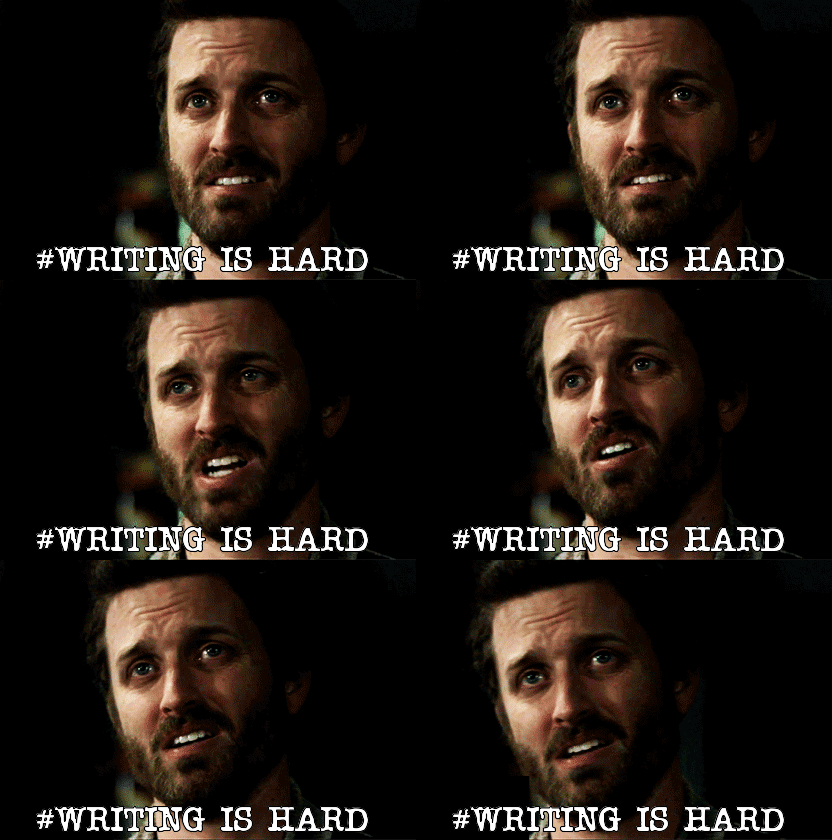
...but also awesome. =)
Monday, January 6, 2014
New Year, New Goal
Happy New Year!
The past couple months have been a whirlwind of traveling and hosting. I feel incredibly lucky to have been able to spend the holidays with so many people I love.
Now that I'm settled back in LA, I am:
1. having a really difficult time not constantly bragging about how much warmer I am than my poor Northeast-dwelling peeps (sorry, guys! I really am trying!)
2. really, really excited for what 2014 has in store.
I'm typically awful at making New Year's resolutions, mostly because they're often a setup for disappointment. Nothing rubs the salt into one's wounds of inadequacy like continually failing to do the things you already sucked at doing in the first place, right?
Last year, though, I decided to brainstorm a few small, positive changes I could make in my life, and then pick one to focus on that would be both manageable and meaningful. I resolved to read one book each month, selected only for my personal enjoyment and relaxation (ie, books read for school/teaching don't count). I not only stuck to this goal--even during those crazy few months back in the Spring when I changed teaching loads and even school buildings like four times--but exceeded it! Reading for pleasure was one of those little things that had gradually slipped away over time (perhaps ironic for a liberal arts major and English teacher?), and reintegrating it in my life proved surprisingly meaningful. It was a welcomed escape from the stresses of my job and hectic life, it introduced me to worlds, words, and writing styles previously unfamiliar, and it helped refocus me on some deeper personal goals that I'd been putting on the back burner for literally years.
In 2014, I'm aiming for a similar type of resolution: small changes in my daily routine that can lead to simple yet positive boosts in my overall quality of life. After brainstorming a few options, I think I've settled on something surprisingly...well...domestic. This year, I'd like to make more of an effort to maintain my living space; specifically, I'd like to do more cooking and cleaning.
Shocking, I know!
Here's the situation, though:
1. I work from home. I'm in my apartment nearly 24/7. It's suddenly really important to always feel comfortable and clean here, but also surprisingly difficult to switch from the "I'm at work and should be working" mentality to the "Damn, I should probably move from my desk/computer and take stock of the state of the rest of my apartment" mentality.
2. Also living here is my dear, sweet boyfriend: the world's most lovable slob. We've lived together for a couple years, but this is the first time we've both been here more or less every day for an extended period of time (he used to travel during the week as a consultant). "Exponential" is a word that comes to mind when contemplating the increase in messiness.
3. The bf eats at work during the week, so I mostly "cook" meals for one. Often, this ends in me realizing, "Oh shit, it's 7:30? I'm starving!" and making a PB&J. I also despise grocery shopping more than any other chore, which leads to unsurprising stretches of barren refrigerator syndrome.
So...while I'm definitely not striving to be the next Martha Stewart or anything, I would like to make some sort of regular cleaning schedule I can easily stick to--and maybe even *gasp!* get my boyfriend to help with--and to make an effort to actually prepare a hot meal that doesn't involve microwaving at least a couple times per week. Nothing too crazy. I am supposed to be some sort of "adult" now, after all. ;-)
(Naturally, this goal is separate from my 2014 writing-related goals. Since this is now my actual JOB, though, I'm treating those less as resolutions and more as necessities--as they should be!)
The past couple months have been a whirlwind of traveling and hosting. I feel incredibly lucky to have been able to spend the holidays with so many people I love.
 |
| {Yes, even this weirdo.} |
1. having a really difficult time not constantly bragging about how much warmer I am than my poor Northeast-dwelling peeps (sorry, guys! I really am trying!)
2. really, really excited for what 2014 has in store.
I'm typically awful at making New Year's resolutions, mostly because they're often a setup for disappointment. Nothing rubs the salt into one's wounds of inadequacy like continually failing to do the things you already sucked at doing in the first place, right?
Last year, though, I decided to brainstorm a few small, positive changes I could make in my life, and then pick one to focus on that would be both manageable and meaningful. I resolved to read one book each month, selected only for my personal enjoyment and relaxation (ie, books read for school/teaching don't count). I not only stuck to this goal--even during those crazy few months back in the Spring when I changed teaching loads and even school buildings like four times--but exceeded it! Reading for pleasure was one of those little things that had gradually slipped away over time (perhaps ironic for a liberal arts major and English teacher?), and reintegrating it in my life proved surprisingly meaningful. It was a welcomed escape from the stresses of my job and hectic life, it introduced me to worlds, words, and writing styles previously unfamiliar, and it helped refocus me on some deeper personal goals that I'd been putting on the back burner for literally years.
In 2014, I'm aiming for a similar type of resolution: small changes in my daily routine that can lead to simple yet positive boosts in my overall quality of life. After brainstorming a few options, I think I've settled on something surprisingly...well...domestic. This year, I'd like to make more of an effort to maintain my living space; specifically, I'd like to do more cooking and cleaning.
Shocking, I know!
Here's the situation, though:
1. I work from home. I'm in my apartment nearly 24/7. It's suddenly really important to always feel comfortable and clean here, but also surprisingly difficult to switch from the "I'm at work and should be working" mentality to the "Damn, I should probably move from my desk/computer and take stock of the state of the rest of my apartment" mentality.
2. Also living here is my dear, sweet boyfriend: the world's most lovable slob. We've lived together for a couple years, but this is the first time we've both been here more or less every day for an extended period of time (he used to travel during the week as a consultant). "Exponential" is a word that comes to mind when contemplating the increase in messiness.
3. The bf eats at work during the week, so I mostly "cook" meals for one. Often, this ends in me realizing, "Oh shit, it's 7:30? I'm starving!" and making a PB&J. I also despise grocery shopping more than any other chore, which leads to unsurprising stretches of barren refrigerator syndrome.
So...while I'm definitely not striving to be the next Martha Stewart or anything, I would like to make some sort of regular cleaning schedule I can easily stick to--and maybe even *gasp!* get my boyfriend to help with--and to make an effort to actually prepare a hot meal that doesn't involve microwaving at least a couple times per week. Nothing too crazy. I am supposed to be some sort of "adult" now, after all. ;-)
(Naturally, this goal is separate from my 2014 writing-related goals. Since this is now my actual JOB, though, I'm treating those less as resolutions and more as necessities--as they should be!)
Monday, November 18, 2013
Book Hangovers and The Secret History
Help! I’m in the throes of what can only be described as a
“book hangover”—that space between novels where I can’t quite bring myself to
abandon the world of the book I’ve just finished to start reading something
new.
The book in question is Donna Tartt’s The Secret History. Yes, I know that it’s Tartt’s new release, The Goldfinch, that’s garnering so much
buzz recently. I’d heard so many wonderful things about her first novel,
though, that I felt compelled to read it before checking out the new one. As an
added bonus, it also came highly recommended for its strong sense of
atmosphere. This is something I’ve been seeking in my reading lately (see last month’s The Night Circus), so I was eager to give The Secret History a look.
My first impression: How did someone not recommend this book
to me sooner?
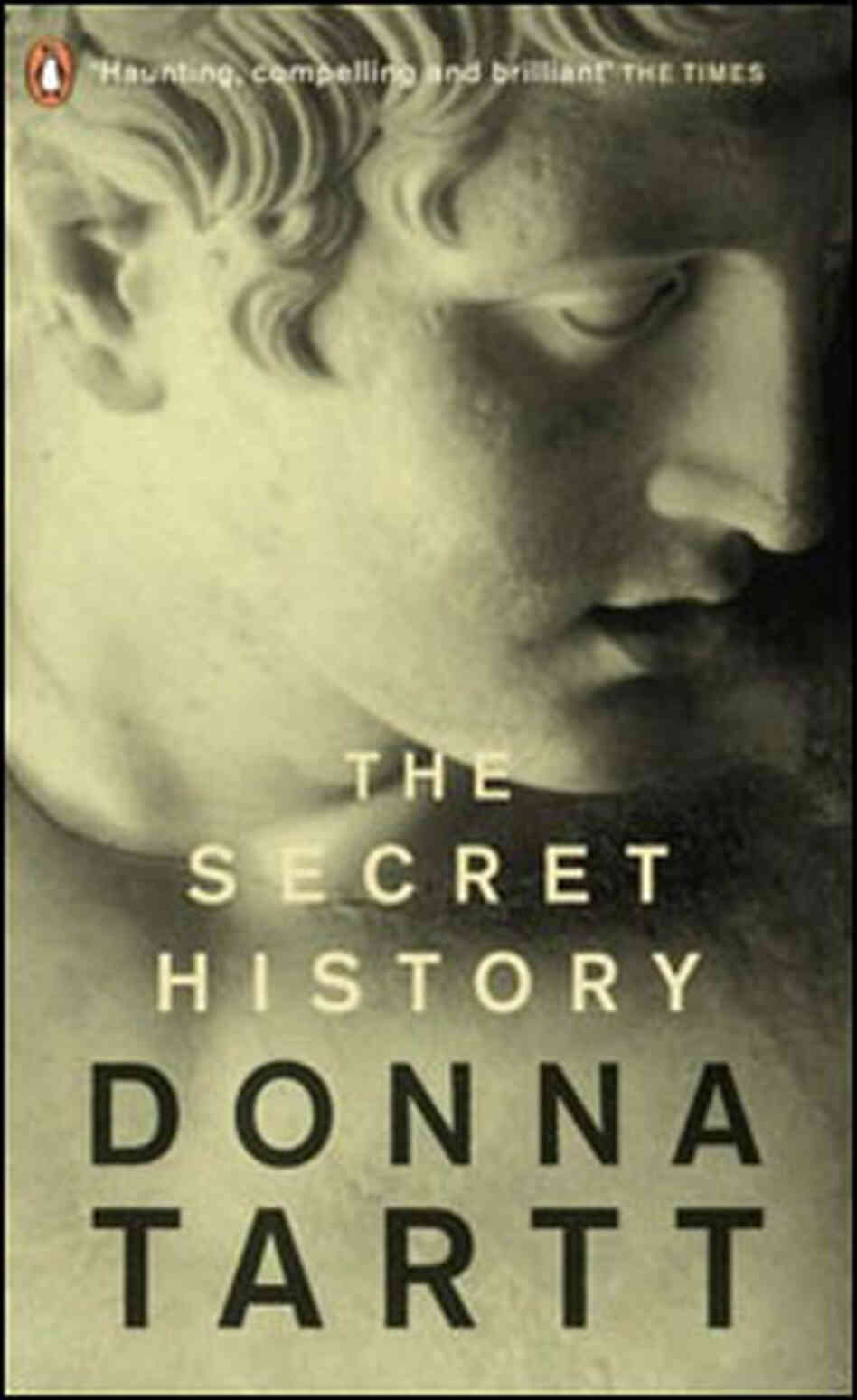 The Secret History is
a thriller on its surface—a sort of murder mystery in reverse, where readers
discover the murder of a young student at the hands of his friends in the
opening pages, and then backtrack to chart the course of events that lead to the
murder and its aftermath. Its real power, though, comes not from the murder
plot, but from the protagonist’s gradual decay as he becomes enveloped in the
turmoil of one of the strangest and most seductive friend groups I’ve seen
portrayed in a novel.
Narrator Richard Papen is an outsider in every sense of the
word. He’s just as out of place with his unsupportive, working class family in
California as he is in the snooty, upper crust, liberal arts college he attends
in New England. Almost immediately, Richard becomes drawn to eccentric
professor Julian Morrow and his exclusive ancient Greek program. Julian
operates largely outside of college jurisdiction, and demands that his
hand-picked students take classes only with him for their entire tenure.
Despite warnings about the practicality of these studies, Richard becomes
enamored with the cool, untouchable Greek students—scholarly and stoic Henry,
charismatic twins Charles and Camilla, shrewd and flamboyant Francis, and
pompous jokester Bunny—and he soon finds himself joining their ranks.
Richard’s
a little Gatsby, a little Pip. His clear desire to belong and his
self-acknowledged fascination with aesthetic beauty and artifice create a
believable descent into trust and complicity with the rest of the group, even
as red flags begin to emerge. Tartt excels at presenting characters who
intrigue and even evoke a kind of sympathy from the reader, despite the fact
that these characters are fundamentally rotten individuals. Much like a Walter
White or a Tony Soprano—though younger and often significantly more
angst-ridden—Tartt’s group of young adults will occasionally display the barest
flashes of morality or kindness or helplessness just at the moment when you
begin to genuinely hate them. Choosing Richard, who is not exactly “pure” from
the outset, but who experiences perhaps the most dramatic moral decline, as
well as having the most objective vision of events, is key in achieving much of
this balance. His excitement at being included within this exclusive group, to
finally rewrite his own life story into something more glamorous and
interesting, is predominantly what makes his actions believable and even
relatable (if not wholly sympathetic).
I mentioned earlier that I came to this book for the
atmosphere; and damned if that isn’t why I stayed! Tartt’s writing is gorgeous,
her prose lush and evocative. Descriptions of the New England landscape abound,
portrayed with the same sense of fierce and somewhat terrifying beauty with
which the Greek students become so obsessed. The students themselves are
wonderfully anachronistic. They dress sharply, their speech is eloquent and
old-fashioned, and they eschew modern pursuits for lawn games, cards, and
discussion of antiquity (apparently any history past Greek and Rome is
unimportant, as one particularly strange and funny moment finds the
unflappable, brain-the-size-of-a-planet Henry totally shocked to discover that
man has walked on the moon). While set in the late 80s, the book has a timeless
feel to it that I absolutely loved. What can I say? I’m a sucker for any novel
that includes bookish students drinking bourbon out of teacups.
While the third quarter sags a bit with some slow scenes (the
murdered friend’s funeral is dragged out for what feels like a hundred pages),
the final section moves quickly and the entire first half is absolutely
riveting—like, can’t-put-it-down-for-300-pages riveting. Some of the content encroaches
a little on “Lifetime special” territory (I’m talking alcoholism, drugs, abuse,
incest, orgies, you name it), but the writing consistently elevates the
material, especially in conjunction with the novel’s major themes. The result
is a strange hybrid of literary fiction and salacious page-turner that is just
the most delicious sort of combo I could imagine.
Seriously, this is one of those rare books where I’m torn
between “I wish I’d written this” and “Thank goodness I didn’t, or I’d miss out
on extreme pleasure of reading it.”
Simply awesome.
Thursday, October 31, 2013
October Reading Roundup
Happy Halloween! My October booklist just happens to be
appropriately uncanny (coincidentally or subliminally?), so I figured I’d do a
quick reading roundup instead of breaking down the reviews separately. Here’s
what I’ve been reading this month!
THE NIGHT CIRCUS, by Erin Morgenstern

Wow, is this book gorgeous. The premise—two magicians caught
in a lifelong duel to produce increasingly enchanting illusions amidst the
backdrop of a nocturnal circus—has a timeless, fairytale quality to it. The
story itself is simple, narrated with a sort of dreamlike detachment as it
progresses through an engaging if not unpredictable plot. But the writing! I
selected this book specifically looking for examples of well-developed,
atmospheric setting; and this is exactly the arena in which Morgenstern
demonstrates her own magic. The descriptions of the circus itself—mysterious,
hypnotic, and beautiful to its visitors—are stunning, full of evocative detail
and conveyed through highly sensual prose. I could only describe this to my
friend as “wordporn” while reading it.* The language and syntax mirror the
dark, lush dreamscape of the circus; and if it’s perhaps a little over the top
for your typical novel, it works wonders within the context of this one. I’ve
read some complaints about the development of the central love story; but
without giving away too many spoilers, I personally found it to be
perfectly resonant with themes regarding art, illusion, and the way in which
people perceive themselves and others through the conduit of art. Apart from a
small section at the conclusion that felt a little didactically ham-fisted,
this novel had me completely engrossed from beginning to end. I only wish there
were a real night circus!
*Note: wordporn is not to be confused with erotic fiction;
it applies to the sensuality of the language itself rather than the content of
the text!
WICKED GENTLEMEN, by Ginn Hale

Wicked Gentlemen
was my dark horse selection for the month. I don’t read many books these days
without a friend/family recommendation or some publisher hype, but I stumbled
on this one through a Goodreads search. I’ve been researching examples of
non-hetero, primary protagonists in genre fiction (specifically fantasy and
sci-fi), where the protag’s sexuality is a part of his or her character without
being the character’s defining
feature or the focus of the novel. This one fit the bill! The novel is a
modern-ish, alternate history fantasy with mystery and crime elements. The
protag is a Prodigal, part of a race of demonic descendants who live among
normal humans but are threatened by a theocratic government. He’s also a
private detective, and his services are quickly tapped by an Inquisitor (a
cop/priest) following a series of brutal murders and the disappearance of the
Inquisitor’s sister. This is a classic case of “love the characters, couldn’t
care less about the plot.” If you can get past some “broken protagonist” angst,
the two main characters are incredibly sympathetic and likable. Their relationship
develops slowly throughout the novel in a way that is natural and fun to read.
My issue was that, while the relationship was clearly not the main focus of the
novel, I found myself far more interested in how the characters were developing
within and between themselves than I was in the actual plot. The mystery starts
out intriguing, but runs out of steam shortly before what should be the final
sprint toward the conclusion. The world-building also falls a bit flat, but has
enough potential that I felt cheated to learn that there are no sequels that
might better develop it—especially since I so enjoyed the premise and the
characters.
THE UNCANNY, essays by Sigmund Freud; translated by David
McLintock; Introduction by Hugh Haughton
 I read a few snippets of this collection in college and have
been
planning ever since to read the entire volume. It’s obviously not light
reading, but I think it would be fascinating to anyone interested in
psychoanalysis who has never seen Freud apply his theories explicitly to
art/literature/creativity in general (something English majors may have
personally done in critical theory-focused classes, but which I imagine few
others have). His examination of how the uncanny manifests itself not in the
great unknown, but in mysteries far closer to our homes and inner lives, is
stirring and intensely thoughtful. The Penguin Classics edition has an introduction by Hugh Haughton that includes specific portions
prefacing each of Freud’s essays. I found these very helpful. Also helpful was
my pad of sticky notes, which I was glad to be using to mark pages when I
decided that the book cover was too damn creepy to look at anymore. Pro Tip:
Post-Its work great for hiding scary covers!
Tuesday, October 8, 2013
Hey, Assbutts! It's Supernatural Tuesday!
 | ||
| {Obviously. Also, see #3 on my Wish List.} |
Supernatural’s 9th
season premiers tonight! I was seriously late to the game on this show, but now
I can’t get enough of Team Free Will doing what they do best: “Saving people,
hunting things…the family business.”
 |
| {Or, perhaps more accurately: "Manly brooding, eye-fucking each other...the fan-servicing business." Ahem. For reals though, this show is the best.} |
I was sad to hear that the incomparable Ben Edlund, creator
of The Tick and scribe of many of
SPN’s best episodes—for instance, Season 5’s “The End” and Season 6’s “The
French Mistake”—left to write for Revolution.
Nonetheless, I have faith in Jeremy Carver and the current writing team to
play out the ramifications of Season 8’s strong finale. The promos that the
CW’s been running feature more Abaddon action, the introduction of a new angel
played by Battlestar Galactica’s Helo,
and the trials and tribulations of the newly-human Castiel. Our favorite
Horseman even makes an appearance!
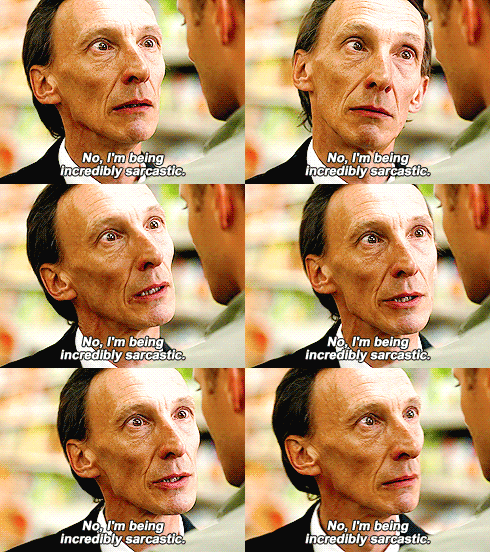 |
| {How exactly does one go about conveying one's love for Death? Seriously, I just want to eat fattening, delicious food with this droll motherfucker.} |
Carver reportedly has a story arc planned through the 10th
season, but that will not for one second deter me from selfishly coveting some
checkmarks on my own Supernatural wish
list!
From the reasonable to the reasonably ridiculous, here’s
what I’m hoping for in season 9.
Top Five SPN S09 Wishes – (BONUS) Now By Category!
#1) Biggest
Character-Related Wish: Epic Villainy
Remember how delightfully disturbing Ol’ Yellow Eyes was?
Not since Azazel has SPN brought on a truly epic Big Bad. Lilith only really
had the season 3 finale to shine; Lucifer was underutilized (and, c’mon,
honestly kind of likable); Dick and the Leviathan were visually creepy-cool but
otherwise dull; Eve’s potential was quashed before it could play out; and I am
beyond sick of the “Oops—I’m the bad guy!” Cas card. Crowley is a truly fantastic
character and came into his villainous own in season 8; but I don’t really see
him as a Big Bad on the same level as someone like Azazel. He’s too fun and
cuddly to be truly frightening, and now, of course, he’s even more in the gray.
Sidebar: I am immensely looking forward to this development. Let’s hope for
more HBO references. “You know nothing, Moose Winchester!” Aaaanyway, my
fingers are so crossed that Abaddon will turn out to be as epic a villain as
she has the potential to be. SPN needs more well-developed and consistent
female characters. I would love for an epically evil, badass knight of Hell to
be one of them!
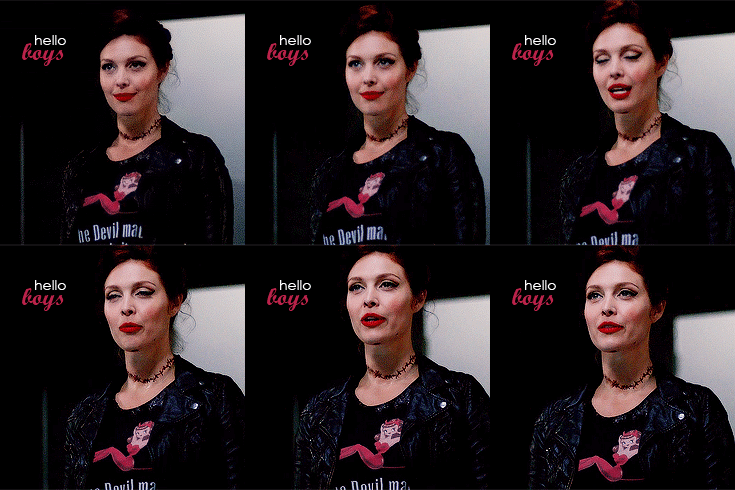 |
| {Girlcrush status.} |
#2) Biggest Feels
Wish: The Return of The Samulet
C’mon, I can’t be the only one still incredulous about the
fact that both Sam and Cas just let Dean toss the amulet in the trashcan. It’s
been so many seasons since then, so I know it’s not likely to return. But
seriously, guys…couldn’t Sammy have fished it out and tucked it away somewhere?
Pretty please?
 |
| {Remember the Christmas special? All the feels!} |
#3) Biggest
Resurrection Wish: Bring Back Gabriel, Already!
Yes, I love Bobby. Yes, I love Team Free Will. Honestly,
though, the writers should take Dean’s advice: sometimes, what’s dead should
stay dead. There are no stakes involved when we anticipate that the brothers
will always be resurrected; and continuing to bring back a character like Bobby
only cheapens the poignancy of wonderful episodes like “Death’s Door” (for this
same reason, I’ll also be bummed if we see Meg again). If they’re going to
resurrect characters, I’d rather see someone like Gabriel come back. Richard
Speight is a fan favorite, and the Trickster episodes were consistently among
the best. Gabriel was arguably the most interesting character on the show with
his hilarious but deadly antics and his complex backstory/development. Maybe
it’s because I just re-watched “Changing Channels,” but I would seriously love
to see this guy back in the fold!
 |
| {My sentiments exactly.} |
#4) Biggest MOTW Wish:
No Bland Standalones, Please
I know that there are fans who still favor the Monster of
the Week episodes. I am not one of those fans. There is nothing worse than
having the story arc stall at a critical moment for the brothers to go hunt
some random vampire. Murderous mannequins? The terrible episode with the man-witch
and the familiar? The random mythic gods and goddesses? Please stop. Just stop.
If there must be a MOTW, I would rather it be a funny episode, a la “The French Mistake” or last season's "Hunteri Heroici." I’d also be okay with a truly
creepy episode, something that mostly disappeared after the first season.
“Woman in White,” “Bloody Mary,” “Something Wicked”…as much as the show
improved when the myth arc picked up, I did really enjoy those genuinely spooky
early episodes. Although I know it wasn’t a popular episode, I also didn’t mind
the found-footage werewolf episode, “Bitten,” in season 8. I’d rather see
something intriguing: a unique format, a frightening episode, something meta or
funny (or both)…or not have a MOTW episode at all.
{Still giggling over Castiel's critical analysis of Roadrunner and Coyote.}
#5) Biggest Fandom
Wank Wish: Dean Can Dig Elvis
Human Cas develops an interest in music, and he takes an
especially strong liking to Elvis. He’s riding shotgun in the Impala with Dean.
“Can I put something on?” he asks when Dean’s Metallica cassette finishes. Dean
raises his eyebrows and shrugs, because really, since when does Cas listen to
or even care about music? He’s curious to see where this is going. Cas flicks
through radio stations until he hears the syrupy croons of Elvis. He grins and
settles back into his seat. Dean can’t help but smirk. He’s about to make a
snarky comment about Cas’s choice in music; but his companion is smiling
contentedly, head bobbing gently along to the tune. Dean swallows his sarcasm
and just shakes his head and laughs. So Cas likes Elvis, huh? Okay. Sure. Dean
can dig Elvis. *Aaaaand fandom explodes.*
 |
| {Not sure if Misha Troll-ins, or just a coincidence... But no, I would not recommend reading "Twist and Shout" unless you like your fic fundamentally traumatizing. If you don't know what "Twist and Shout" is, please ignore my ramblings and carry on.} |
In conclusion: Crowley.
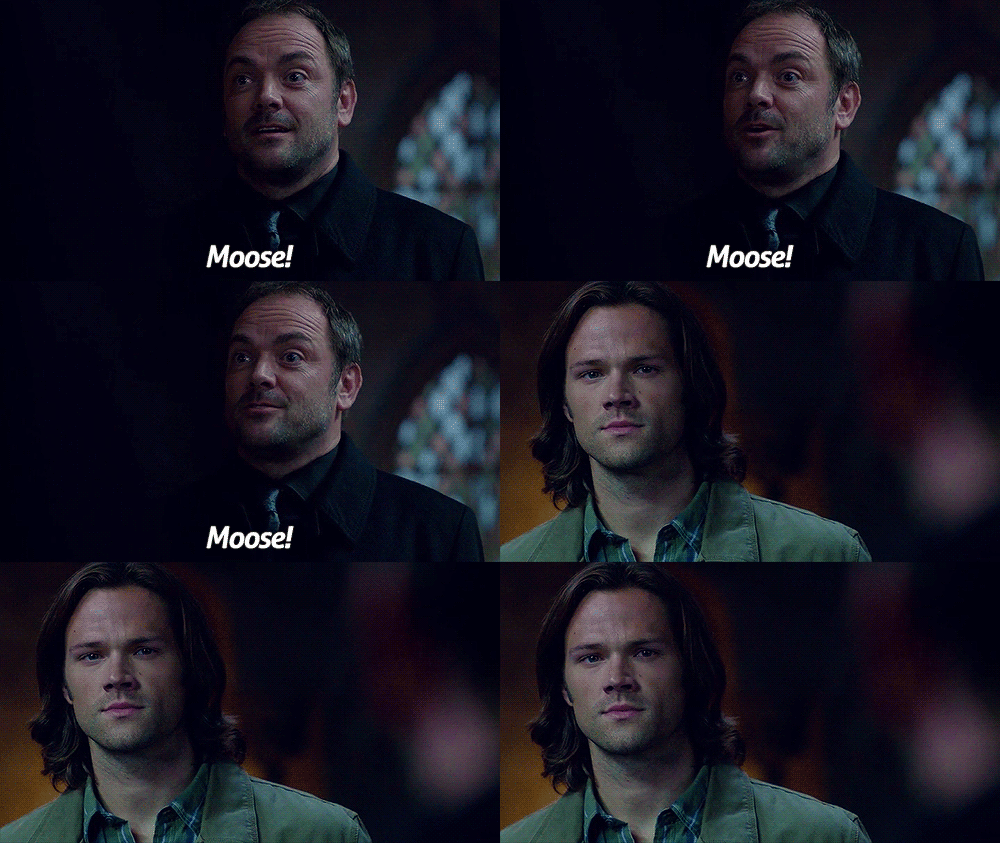 |
| {Really, let's just have every episode be about Mark Sheppard being handsome and sly. Cool?} |
Enjoy your pie and purple nurples. Happy viewing!
Image/gif sources:
http://www.tumblr.com/tagged/pig-n-a-poke
http://destielpassengers.tumblr.com/page/4
http://www.fanpop.com/clubs/supernatural/images/34556272/title/death-photo
http://rorycas.tumblr.com/post/50627247342/hellchesters-abaddon-the-queen-of-everything-in
http://dnmmagazine.com/2012/06/17/supernatural-the-impact-of-an-amulet/
http://www.neowin.net
http://8tracks.com/gabrielrising/i-can-dig-elvis
http://rebloggy.com/post/supernatural-sam-winchester-jared-padalecki-crowley-mark-sheppard/32858210286
Monday, October 7, 2013
Review: The Cuckoo's Calling
I’d like to begin my review of The Cuckoo’s Calling by giving you a bit of context.
Reasons Why I Read
The Cuckoo’s Calling
·
Its author, rooky novelist Robert Galbraith, was
revealed to be none other than J.K. Rowling—personal hero and queen of my
heart—writing under a pseudonym.
·
I don’t usually read mysteries or thrillers. I
thought it might be beneficial to my writing to branch out.
·
J.K. Rowling wrote it!
·
As much as I adore Harry Potter, I really, really could not get through The Casual Vacancy. I thought, “Maybe
that was a fluke. Maybe I’m not British enough to get it. Maybe this one will be different. I should really give her
one more shot…”
·
I recently watched BBC’s Sherlock and was craving more detective funsies in the absence of a
third season.
·
Joanne Kathleen bloody Rowling! Seriously, guys!
I love her!!!
In other words…yes, my massive fangirl,
bordering-on-worship, nerd crush on J.K. Rowling is pretty much 100% of why I
picked up The Cuckoo’s Calling.
Please do not let that fact deter you from reading it, though, because—in all
honesty—this is just the sort of detective story that you will love curling up
with on a rainy day with some tea and a blanket, dreaming, if you’re anything
like me, of running around the misty streets of London with protagonist
Cormoran Strike.

Private detective Strike is my favorite protagonist that
I’ve read in a long while. He’s a war vet, burdened by a messy family history,
current relationship issues, and the nuisance of a partially amputated leg. The
way in which Rowling describes him—he’s hulking, hairy, and not much of a
looker; a far cry from, say, Benedict Cumberbatch’s androgynously dreamy
Sherlock—is endearing and somewhat reminiscent of a familiar Rowling character.
I couldn’t help but picture him as a younger, surlier Rubeus Hagrid! For all of
his physical and psychological wounds, though, Strike manages to float above the
typical tropes of misanthropy and emotional wallowing. His skill in reading
people, his awkwardly sweet (platonic!) interactions with temporary secretary
Robin, and his skill in piecing together the crime make him an endearing and
believable hero.
The mystery itself concerns supermodel Lula Landry’s death.
When the gorgeous but troubled Lula takes a swan dive off her apartment
balcony, the police conclude that it’s a suicide. But Lula’s wealthy brother
smells foul play, and hires Strike to investigate. In typical Rowling style, a
colorful cast of characters is introduced as Strike wades through the people
and places connected to Lula during her last days of life. The mystery unravels
slowly but logically. There are no completely ludicrous moments, and the
resolution doesn’t come from left field. There’s no, “Aha! It turns out she was
murdered by the postman who was mentioned in one sentence on page 17!” here. I
was able to predict the ending, but I didn’t feel that it was too obvious or
that the conclusion came too early in the text. Then again, I’m not a mystery
reader and I also wasn’t trying particularly hard to guess where things were
going; so some fans of the genre might have a different experience.
Significant attention is also paid to themes of social
inequality, media obsession, and the “price” of fame—again, familiar territory
for Rowling—but I found that these themes toed the line between being strongly
developed and preachy fairly well. It’s interesting, too, to consider the
difference between Rowling writing about (Harry’s) fame when she was still an
unknown writer, versus her new insights on it as one of the most well known and
sought after writers in the world. At one point, she remarks that “[Strike] had
never been able to understand the assumption of intimacy fans felt with those
they had never met.” I know that if I met JKR, my first instinct would be to
run up to her and hug her silly; and I’m sure many other people feel and have
felt the same. I can only imagine how strange it must be to exist on the
receiving end of that sort of love and respect, coming from people who know you
only through your words.
Of course, many of her insights into the lifestyles of the
rich and famous are also downright hilarious. One of my favorite characters,
fashion designer Guy Somé, has this to say about Lula’s rock star boyfriend:
“I’ll tell you,” he said, without pausing for an answer. “It’s that wounded-poet crap, that soul-pain shit, that too-much-of-a-tortured-genius-to-wash bollocks. Brush your teeth, you little bastard. You’re not fucking Byron.”
Air snaps! All the air snaps!
My one complaint is a bit ironic, since it concerns a
characteristic of Rowling’s writing that made the HP books so wonderful.
Rowling takes the time to describe absolutely everything, in painstaking
detail. This is fantastic when she’s world building in a fantasy novel, but it
can really tank the pacing when we’re dealing with modern day London. I’m all
for detail, but I don’t need paragraph-long descriptions of the surroundings or
of random people on the street who will never be discussed again. Some
streamlining could have benefitted the pace and tone of the narrative. On the
other hand, Rowling-writing-for-grownups has the benefit of lots of decidedly
un-HPish descriptions that are relentlessly fun. Take, for instance, this
simile: “…when her mouth puckered into hard little lines around the cigarette,
it looked like a cat’s anus.” You never get to see Harry thinking something
like that!
Ultimately, I enjoyed the novel and was left with that same
cozy feeling I always get at the end of a J.K. Rowling story. There’s something
about her writing that makes me want to crawl up inside it and just snuggle in
the words. I still love you, Jo! I’d happily read more Cormoran Strike novels.
Keep ‘em coming!
Monday, September 23, 2013
Erotic Alien Hairdressing: My Rather Long Review of The Bone Season
The moment that Samantha Shannon’s debut novel—the first in a planned series of seven—came onto my radar, I knew I
wanted to read it. The press-hyped comparisons to JK Rowling’s Harry Potter series caught my eye, but
the description of the book itself reeled me in. It was characterized as a
dystopian, “New Adult” novel, with fantasy and speculative fiction elements,
set in the future (though involving a bit of alternate history) in London and
Oxford. Um, hello. Sign me up! The fact that the book was penned by a recent
Oxford graduate only added to the appeal. I am typically inclined to support
talented young, female writers. Those writing in my preferred genres get bonus
points!
 |
| {Or, as my boyfriend would call it, "The Boner Season."} |
A Few General
Comments:
I read the book over both legs of
my recent trip to Michigan. My primary reaction? This is a series—and a new
author—with real potential. I was impressed by the quality of the world
building and the overall vibe of the book’s smooth blend of dystopia and
fantasy. Some readers have whined of plot holes and unanswered questions (be
warned that the book does end on a cliffhanger), but I have patience and faith.
The first installment of any series tends to be a starting point from which the
world, the characters, the story, and even the writer’s talent take root and
grow. As a new author, Shannon’s craft will no doubt mature with her series as
it progresses through the remaining six volumes.
I’ve also checked out a few
interviews with Shannon, who seems humble, passionate about her writing, and
generally a cool chick. In this Q&A, she talks about her HP-love and anxiety over the press’s
insistence on comparing her to Rowling. Then she highlights the Benedict
Cumberbatch calendar hanging in her room. Samantha, let’s be besties! I will
definitely be awaiting the next installment in this series, and cheering for Shannon’s
continued success.
And now: a few notable strengths
and weaknesses, plus some juicy bits that I want to discuss about The Bone Season. Potential light
spoilers, though I've censored anything that might give too much away. Skip the “juicy bits” section at the end if you haven’t
read the book.
Strengths
·
Beautiful
world building! We get the dystopian Scion London (a little 1984, a little V for Vendetta); the clairvoyant-run crime Syndicate; the Sheol I
penal colony, based in the abandoned grounds of Oxford; the Rephaim, a powerful
race of humanoid creatures who run Sheol I; the Emim—aka “Buzzers”—a species of
flesh-eating creatures that threaten humans and Rephs alike; and, of course,
the whole gamut of clairvoyance, complete with diverse abilities, practices,
and even a sort of social caste. There’s also a nice bit of alternate history
thrown in to accommodate for the rise of clairvoyance and how this event shaped
the sociopolitical landscape of Shannon’s world. My favorite aspect was the whole
concept of the aether, the sort of mystical spirit-force that voyants tap to
use their powers. Although Shannon does not dwell on religion in the text,
there are some definite spiritual-verging-on-religious connotations to the
relationship between humanity, the Rephs, voyance, and the aether. It will
be interesting to see how this plays into the overall mythology of the series
as it progresses.
·
The
primary players—both protagonists and antagonists—are interesting and likable.
Paige is suitably feisty as a heroine. I’m occasionally on the fence about the parade
of Katniss Everdeen clones being marched out in the name of feminism or
whatever—yes, we certainly need strong female characters; but the idea that
only ass-kicking, surly, tomboyish, warrior women can be considered “strong” is
ludicrous and demeaning—but Paige also has a softness to her that Shannon
occasionally reveals. I hope that her character will continue to develop
outside of the “courage” and “romance” arenas of her personality. Warden, too,
shows signs of complexity beyond many of his genre counterparts. He exhibits
touches of the ubiquitous Byronic hero, but Shannon tempers these with enough
redeeming qualities to prevent him from being an asshole (for the love of God,
YA writers of all genres, take note of this). The primary antagonist, Nashira
Sargas, is an ice queen; but I’m interested to learn more about her
motivations, her backstory, and particularly the history behind her
relationship with Warden.
·
This is
not paranormal romance and there are no love triangles. It’s always
refreshing to find a genre novel that devotes time to developing characters’
relationships (romantic or not) without turning into a romance novel with some
plot thrown in haphazardly. A habitual offender, as much as it
pains me to say it because I still love her to death, is my girl Cassandra Clare. Both her Mortal Instruments and especially her Infernal Devices series begin with inventive world building and engaging
premises, which are sabotaged by her inability to resist devolving into increasingly
melodramatic romantic plotlines, usually driven by irritating love triangles.
What results is a work that can be read as a potentially interesting story that
is continually stalled and/or underdeveloped at the expense of long and
repetitive love scenes; or a romance novel that is bogged down by extraneous
plotting. Shannon avoids this by preventing the romantic aspects from
overshadowing the more important plotlines. The only “romance” at play
here is slow moving and plot related; and it is definitely not the primary
focus. There’s no forced love triangle to annoy or divide her readers. For
those who enjoy a little kink, there are some
transgressive elements to the romance (power differential, interspecies…). Just
don’t expect some Fifty Shades nonsense!
·
She makes
references to my favorite books, so I will love her even if her future books
are turds. Frankenstein? Check. The Turn of the Screw? Check. I’m going
to go ahead and assume that a randomly mentioned spirit muse dubbed JD is the
ghost of John Donne. No one try to convince me otherwise!
 |
| {Seriously, Samantha Shannon, let's chill and geek out about books together sometime!} |
Weaknesses
·
Some
structural editing would be helpful. Especially in the first quarter of the
book, there is a jarring lack of balance between exposition and action. Two
large information dumps that occur early in the text are helpful in giving
the reader the necessary background information (I know some have complained
about finding these sections confusing or “too much” in terms of new info, but
I didn’t find this to be a particular issue), but stall the plot to a
noticeably irritating degree. There’s also a temporal detachment that makes it
difficult to gauge how much time has passed between certain events. I was
surprised, late in the book, to learn the time span from beginning to end; I
initially assumed that things transpired over a much shorter period of time.
Just a few more quick time references throughout would have better clarified the
speed at which certain characters and events were developing throughout the
story.
·
Some of
the supporting characters are underdeveloped. On the one hand, we have some
truly fun and vivid secondary players—namely Jaxon Hall, a charismatic crime
boss who reads like the love child of Fagan and Long John Silver, with the
style and panache of Gilderoy Lockhart. I want more of him, please! On the
other hand, we get characters like Sebastian and Liss, friendly but downtrodden
types who are meant to inspire pathos in both the reader and, especially, in
Paige. The trouble is that these characters are not fully drawn enough to
resonate. Seb, who seems intended to inspire a substantial portion of Paige’s
emotions and actions, gets so little development that he seems like an
afterthought. I couldn’t buy her emotional investment in a character with so
little “screen time.” While Paige’s connection to Liss is totally believable,
Liss herself is not particularly interesting at this stage in the text. There
were a slew of other secondary characters who came and went with little lasting
impression, but I was not as bothered by these; both because many these
characters seemed more plot-necessitated, and because I expect that the ones
that matter will be developed in future books.
·
Do we
need to hear things from Paige’s point of view, or would third person narration
be more effective? First person narration is so popular because it
generates a certain ease in both writing and reading. However, it also sets
limitations on the prose. This was my first foray into the “New Adult” genre;
and I was anticipating a coupling of YA’s high-interest narrative and a more
literary, adult style of writing. Be warned: while The Bone Season follows older characters (Paige is in her
twenties), it reads exactly like a YA novel. I think this has less to do with
the caliber of Shannon’s writing than with the decision to have her
protagonist—who is neither particularly bookish nor overly eloquent—narrate the
series. Apart from the world-specific jargon, there isn’t much in the way of
artful diction or syntax. It isn’t as distracting as Katniss’s pervasive
sentence fragments in The Hunger Games,
but it was noticeable enough that I repeatedly wished Shannon had made the
short leap over to third person limited. As
a SPOILERY side note, highlight to read: Perhaps it also would have
eliminated one of the few minor details that really irked me—when Paige’s first
encounter with Warden leads her to immediately note what a hottie he is. We
could have been alerted to the fact without being ushered into the obvious,
“Welp. I guess no matter what happens from here on out, they’re probs gonna
hook up at some point!” I fervently thought that that one, tiny moment
undermined much of the beauty of how slowly and ambiguously their relationship
progressed.
The Juicy Bits-
Random Other Musings
**Highlight to read, but beware! Spoilers abound! Don’t read this section if you haven’t
read the book!**
·
Erotic
Alien Hairdressing—or, that moment when the fact that your lover is putting
your hair into an updo is more bizarre than the fact that your lover is a
different species. I’m not going to lie, here. The moment when Warden
started intricately dressing Paige’s hair had me literally laughing out loud. I totally get the intimacy of the moment. I even thought
it was pretty hot. But the image of this giant, sexy, non-human warrior playing
hairdresser with his big ol’ man hands was more than a little funny.
·
What’s
going on under Warden’s skirt? Can he and Paige actually get it on?
Samantha Shannon indicated on Twitter that yes, Rephs do in fact have the
ability to reproduce with one another. However, we never see any Reph children
described in The Bone Season. I
wonder why? The more important question is obviously whether or not Rephs and
humans can do the dirty, as many readers are clearly anticipating some cross-pollination!
I think it’s safe to assume that they are anatomically similar to humans, as I
doubt Bloomsbury would be very happy if Shannon gave them tentacle dicks or
something of the sort. Given the fact that Rephs are repeatedly described as
being exceptionally tall, I’m also going to go ahead and assume that they are pretty
hung. Could this present some anatomical challenges? Also, what does it say
about me that these are the main questions I have lingering after book one?
No—please—don’t respond to that! As long as Shannon doesn’t devolve into Breaking Dawn type ridiculousness, I
think all will be good.
·
I DO have
a theory about who and what the Rephaim are. I previously mentioned my
interest in the aether. It’s probably too early in the game to
make solid predictions, but I’m going to guess that the Rephaim will turn out
to be some sort of pre-Adamite form of humans. Perhaps they will be similar to
Nephilim, given their stature and attractiveness, but within the
"theology" of her world, where the aether acts as a sort of
nirvana-as-God force and they're, like, this connected but unique offshoot of
that. Just my two cents, though.
·
Where are
the damn Buzzers? For such an important threatening force, the Emim sure
don’t seem to make many appearances. I’m really hoping for more Buzzer action
in book two…plus a more detailed description of what they look like and where
they come from. Their initial description reminded me a bit of these creatures
called the Crekka in my own series-in-progress—reptilian humanoids who eat
human flesh and are also named for the sound they make—so I’ve been picturing
them somewhat like that. Or are they more like zombies? Or maybe wendigos? Give
us the deets, Samantha Shannon!
Alright. Enough for now. I’d love to hear your thoughts on The Bone Season! Feel free to drop a
line if you want to talk books or argue about whether the spirit “JD” was
supposed to be the ghost of John Donne (it totally was—right?).
 |
| {Do my insect metaphors arouse you?} |
Subscribe to:
Posts (Atom)